


Water

To manage this key resource in a sustainable, controlled, and monitored manner. Because water is precious and vital.

Loïc Haras

Sustainable Construction Business Lead at Sinteo

The Challenges

In a context of increasingly pronounced water stress, water management is becoming a growing challenge in real estate, both for buildings under construction/renovation and operational sites. Indeed, considering that approximately 12% of global freshwater is consumed by building construction and operation, that out of a French person's 6000L/day water footprint, only 150L relate to direct use, or that the use of domestic hot water accounts for 10% of the tertiary sector's final energy consumption, addressing water consumption in real estate is no longer an option; it is a necessity.

Four key challenges are identified:

  1. Water Usage: Leaks across the entire public and private network account for 19% of distributed water. This implies that only 81% of potable water injected into the network reaches the end-user. The detection and repair of these leaks must be a primary concern for real estate asset owners. Furthermore, the management of green spaces, including their irrigation, necessitates thorough consideration in a +4°C world where nature-based solutions for urban cooling will become standard practice.
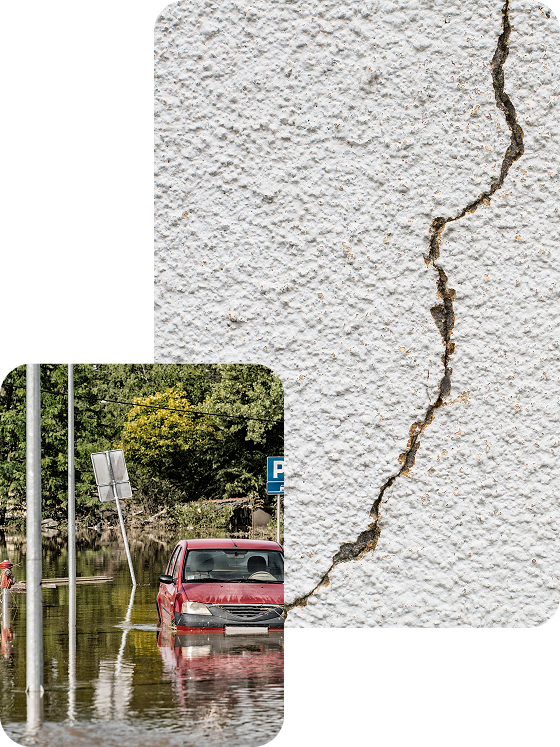
  2. Climate Change: Droughts and floods are already a daily reality. It is therefore crucial to design and adapt our buildings accordingly.
  3. Regulatory Framework: Similar to other building "consumables" (energy, carbon), numerous regulations are being updated to incorporate water management (e.g., "décret tertiaire", PLU, RE2020, etc.).
  4. Biodiversity Preservation: Wetlands are remarkable ecosystems, exceptionally rich in flora and fauna species. It is therefore crucial to preserve them within the context of real estate construction or renovation projects.

Our Solutions

Depending on the requirements, we deploy our qualified engineers holding CBCP (Certified Building Commissioning Professional) certification to support project owners across various building typologies (offices, hospitality, collective housing, public institutions, etc.) and throughout all stages of a building's construction/renovation:

Asset Strategy

  • Resource Efficiency:
    • Definition of overall water reduction targets at the portfolio level,
    • Preparation of reports (CSRD, Taxonomy, etc.)
    • Forward-looking consumption scenarios by asset typology / country / usage
    • Monitoring of trajectories against objectives to prioritize investments
  • Resilience:
    • Mapping of the portfolio's water risks
    • Identification of the most exposed areas / assets
    • Calculation of the cost of inaction and prioritization of actions

Building Design

  • Resource Efficiency:
    • Integration of sustainable construction best practices incorporating the water aspect (e.g., Greywater reuse)
    • Selection of water-efficient equipment and optimization of distribution systems
    • Studies on rainwater harvesting and reuse tailored to each operation. Calculation of network discharge rate reduction.
    • Water Life Cycle Assessment
  • Resilience:
    • Identification of local risks of flooding or overflow
    • Slowing down runoff and promoting infiltration through revegetation and de-impermeabilization
    • Development of best practice guides to limit impacts

Building Operations

  • Resource Efficiency
    • Implementation of water management and real-time consumption monitoring
    • Operational recommendations within green committees to enhance water efficiency
    • Technical diagnosis: installations and their condition (obsolescence, leaks, high flow rates)
    • Prioritization of consumption reduction levers across the entire portfolio
  • Resilience
    • Recommendation of physical measures: flood barriers, elevation of critical installations
    • Integration of actions into the operation and maintenance plan to limit the cost of inaction (Economic impact, CAPEX/OPEX, ROI)

Nature-based solutions

  • Resource Efficiency
    • Wetland Delineation Studies (Water Act)
    • Simplified hydrological and hydrogeological diagnosis ;
    • Agroecological diagnosis of soil functionality ;
    • Climate resilience audit of outdoor spaces ;
    • Water cycle study at the plot level: zero stormwater discharge strategy ;
    • Eco-landscape project management: biodiversity, uses, and biophilia.
  • Resilience:
    • Outdoor comfort study: simulation of the urban heat island effect ;
    • Hydro-landscape project management: wet green infrastructures ;
    • Ecological engineering project management : de-artificialization, de-impermeabilization, revegetation, ecological restoration.

Our conviction:
with or without certification, a project
can always be ambitious

Our References

User-centric
rehabilitation

User comfort and building connectivity are central to this renovation project. The user experience is enhanced by numerous connected services that will be available: click & collect concierge services, solar shading, HVAC, etc.

Malesherbes – Rehabilitation of a Haussmannian Building

Malesherbes – Rehabilitation

For this elegant project located on Boulevard Malesherbes in Paris, we interpret the client's expectations

Geothermal Storage and Extraction in Aubervilliers

We manage the energy strategy for this building complex, comprising a hotel and an office building. The building utilizes a novel geothermal technology designed to store and draw energy from the ground based on the site's usage.

Workshops & Training

The Construction Fresk

An engaging and collaborative workshop focused on construction, designed to address the challenges of climate change.

The Climate Fresk

In just 3 hours, The Climate Fresk enables participants to grasp climate challenges and collectively transition to action.

2 Tonnes

2 tonnes represents the average carbon footprint per inhabitant that we should achieve by 2050. How can this be achieved?

To Learn More

Commissioning for Energy Performance

Drawing on lessons learned, such as from the PREBAT program, we now know that selecting theoretically high-performing equipment does not guarantee its operational performance.

Real Estate Decarbonization

The Carbon Risk Real Estate Monitor (CRREM) project has developed a scientific tool to assess decarbonization pathways consistent with the objectives of the Paris Agreement on Climate.

Tertiary Decree: Initial Deadline and Impacts on Asset Management

By September 30, 2021, tertiary buildings with a floor area exceeding 1,000m² were required to meet the initial deadline of the Tertiary Eco-Energy Scheme (DEET – formerly the Tertiary Decree), namely, their registration on the governmental OPERAT platform.

Contact Us

Do you have a project or questions?
Let's discuss to find the solution tailored to your needs.

    * Required fields

    Our Other Areas of Expertise