





Materials
& reuse

Integrating the right material in the right place, balancing technical requirements with environmental efficiency. Every reused resource represents a preserved material, as the most effective waste management is waste prevention.

Emily Grout

Environmental Project Management Expert

The Challenges

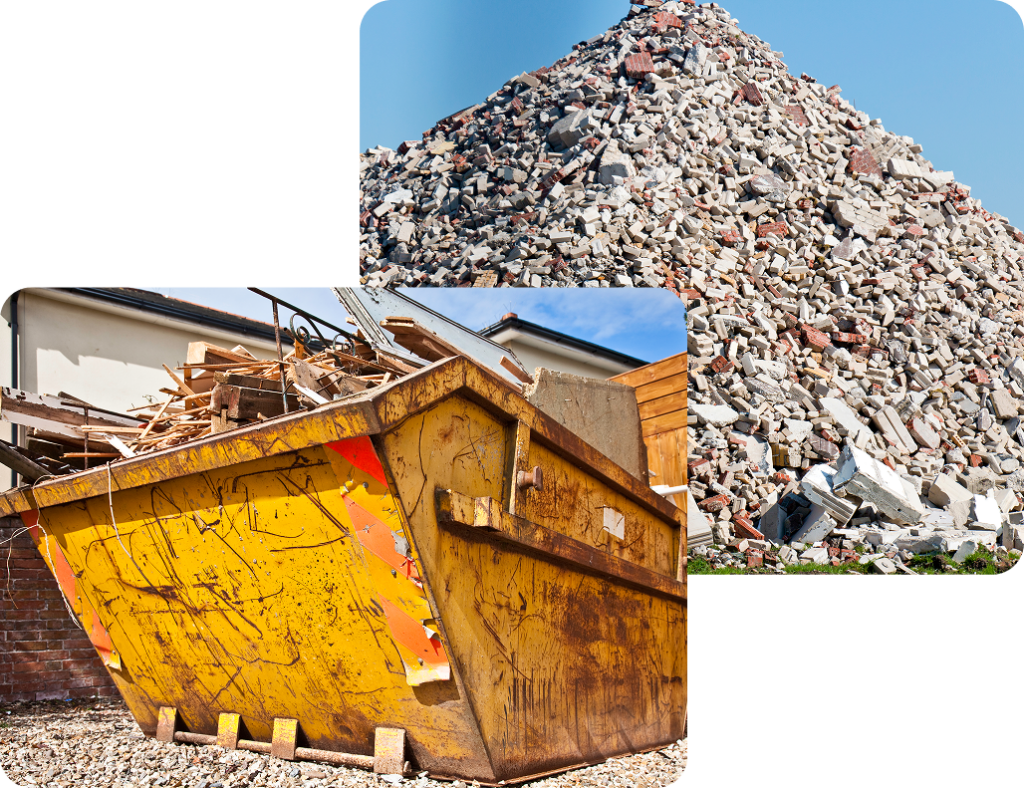
The building sector is the largest waste producer in France, with less than 1% of this waste currently being reused in projects. Furthermore, the embodied carbon of a new or renovated building accounts for 60 to 90% of its carbon footprint.

Given these overwhelming figures and the acceleration of regulatory requirements — SNBC, AGEC law, RE2020 and its strengthened carbon thresholds — the real estate sector must rethink its approach to design, construction, and renovation.
Environmental labels such as BBCA, HQE, or BREEAM, and local environmental initiatives (BDM, BDNA, BDO, BDNA, BDF) are following this dynamic by more strongly integrating the concepts of circular economy, material carbon impact, and waste reduction.

In this context, reuse can no longer be a sporadic or marginal option; it has become a strategic lever for decarbonization, cost control, and differentiation.

Our Solutions

Depending on the requirements, we deploy our qualified engineers holding CBCP (Certified Building Commissioning Professional) certification to support project owners across various building typologies (offices, hospitality, collective housing, public institutions, etc.) and throughout all stages of a building's construction/renovation:

Diagnostics

  • Territorial Diagnostics (identification of potential local materials and reuse channels)
  • PEMD Diagnostics
  • Resource Diagnostics: developing the analysis of materials with high reuse potential

Reuse Project Management Assistance

  • Definition of the operation's circular economy program (defining objectives and implementation strategies)
  • Support in design and execution to achieve reuse and circularity objectives

Reuse Project Management

  • Circular economy design (material data sheet creation, sourcing, drafting of tender documents)
  • Monitoring of the stripping phase and selective deconstruction, and interim report
  • Monitoring of the execution phase (reuse validation, implementation monitoring) and final report

Material Data Sheet (FDES/PEP)

  • Product or Construction System LCA
  • Creation of FDES (Environmental and Health Declaration Sheets), in accordance with standard NF EN 15804+A2 or EPD (Environmental Product Declaration)
  • PEP

Diagnostics

  • Territorial Diagnostics (identification of potential local materials and reuse channels)
  • PEMD Diagnostics
  • Resource Diagnostics: developing the analysis of materials with high reuse potential

Reuse Project Management Assistance

  • Definition of the operation's circular economy program (defining objectives and implementation strategies)
  • Support in design and execution to achieve reuse and circularity objectives

Reuse Project Management

  • Circular economy design (material data sheet creation, sourcing, drafting of tender documents)
  • Monitoring of the stripping phase and selective deconstruction, and interim report
  • Monitoring of the execution phase (reuse validation, implementation monitoring) and final report

Material Data Sheet (FDES/PEP)

  • Product or Construction System LCA
  • Creation of FDES (Environmental and Health Declaration Sheets), in accordance with standard NF EN 15804+A2 or EPD (Environmental Product Declaration)
  • PEP

Our conviction:
with or without certification, a project
can always be ambitious

Our References

Stellar

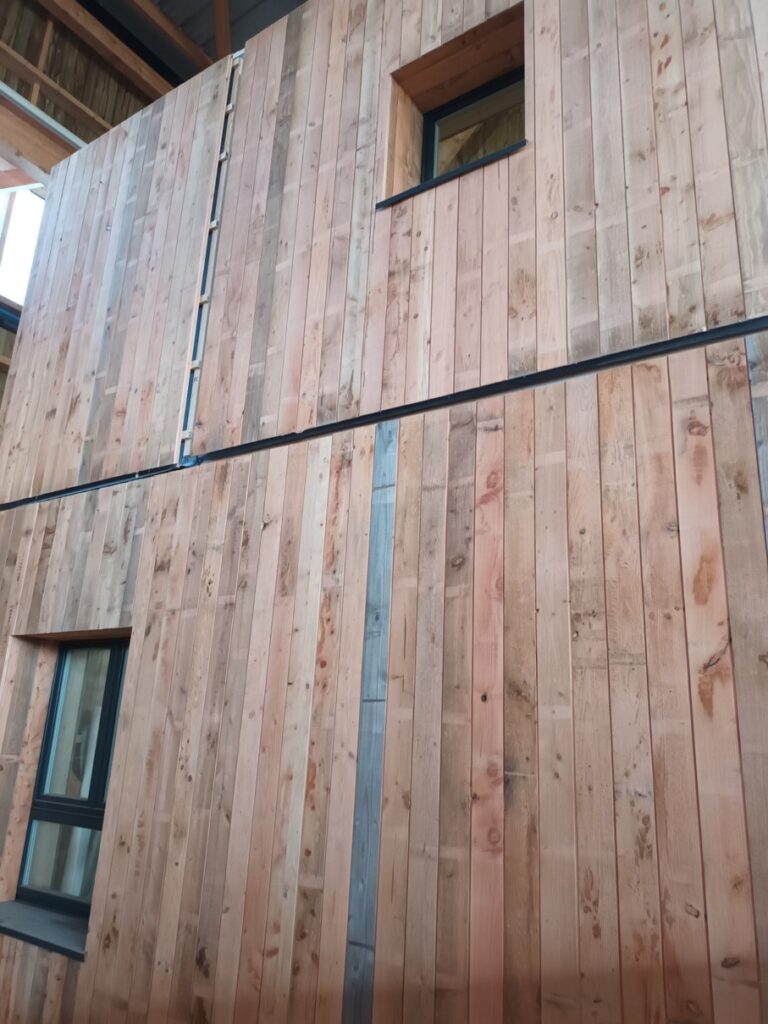
Redevelopment of a commercial complex consisting of three separate buildings that are being integrated into a single real estate complex
Read more »

SCE - LCA

We translate the client's expectations into an ambitious acoustic program, focused on occupant comfort.

Read more »

Workshops & Training

The Construction Fresk

An engaging and collaborative workshop focused on construction, designed to address the challenges of climate change.

The Climate Fresk

In just 3 hours, The Climate Fresk enables participants to grasp climate challenges and collectively transition to action.

2 Tonnes

2 tonnes represents the average carbon footprint per inhabitant that we should achieve by 2050. How can this be achieved?

Contact Us

Do you have a project or questions?
Let's discuss to find the solution tailored to your needs.

    * Required fields

    Our Other Areas of Expertise